Slow changes
In 2018, I visited the Quinta Real de Caxias for the first time. The buildings were off-limits, the gardens not in the best of shapes and many statues were missing. The parts of the premises that once were used for growing vegetables and live stock were in disarray. Obviously, I found those parts the most interesting to photograph. After all, decay makes for nice images.
Then, in 2024 - I think - I visited the place again, only to find the gates closed for reasons of ongoing renovations. A renovation that was already hinted towards in 2016.
After a couple weeks of too much rain, I was in desperate need of a different horizon than the ocean view at the Estoril stretch of the coastline and I hopped on the train to Caxias once again. Not specifically with the Quinta Real in mind though, that was more of a spur of the moment kind of decision. I wanted to hear birds, maybe wind through the trees. I wanted to see greens, trees and branches. No waves and no screaming gulls!
Even before I enter the park, it is clear that the renovations haven’t finished yet. Some areas look better, some look worse, most looks pretty much the same. I guess it requires a lot of work.
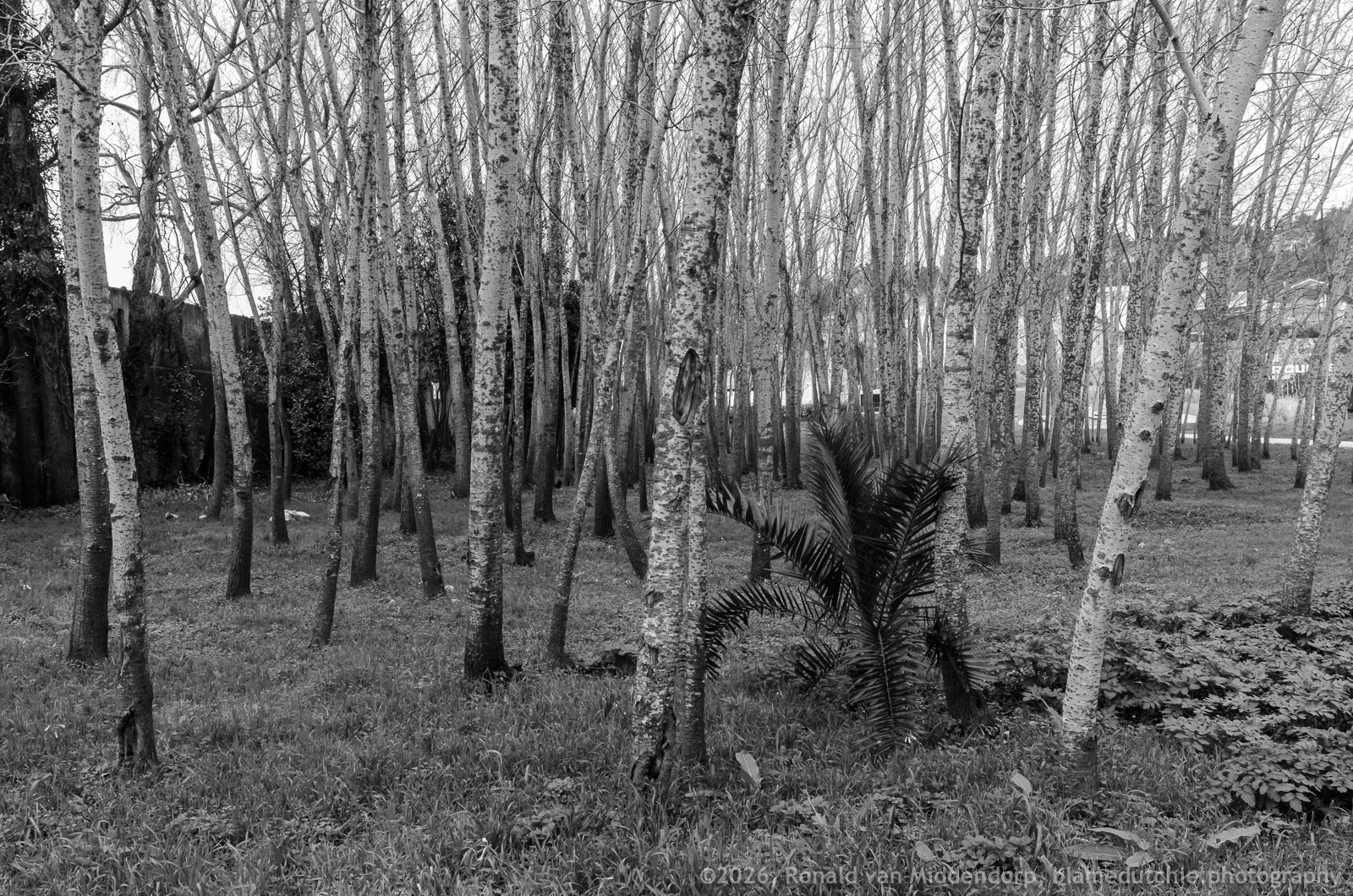
Only a few metres away from the path, already feeling better.
The scent of humidity
Less than fifty metres into the park, I already move away from the path and it doesn’t take long before the lower part of my jeans are thoroughly wet. Slowly, I walk between the thin trees, not sure what I’m looking for. I’ll know it when I see it. I hope. Some tangled branches catch my attention. Some trees have beautiful gnarly branches during the winter months. I love the way fig trees look completely different without their large leaves. It is like they are in a constant battle with themselves. And willows, who knew there are so many different ones? Around threehundredandfifty, plus numerous hybrids! The pollard willow, I’ve known well since childhood. Where I lived, there were many brooks whose borders had long lines of them growing.
Walking in this still wet park, the scent of wet soil, the swishing of the wet grass, revives childhood memories. As a boyscout, once a year we would get together in the farmlands to prune pollard willows. Always in cold weather, because it’s done in the winter when the tree is resting. I have very fond memories of hot chocolate milk after a couple of hours of hard work.
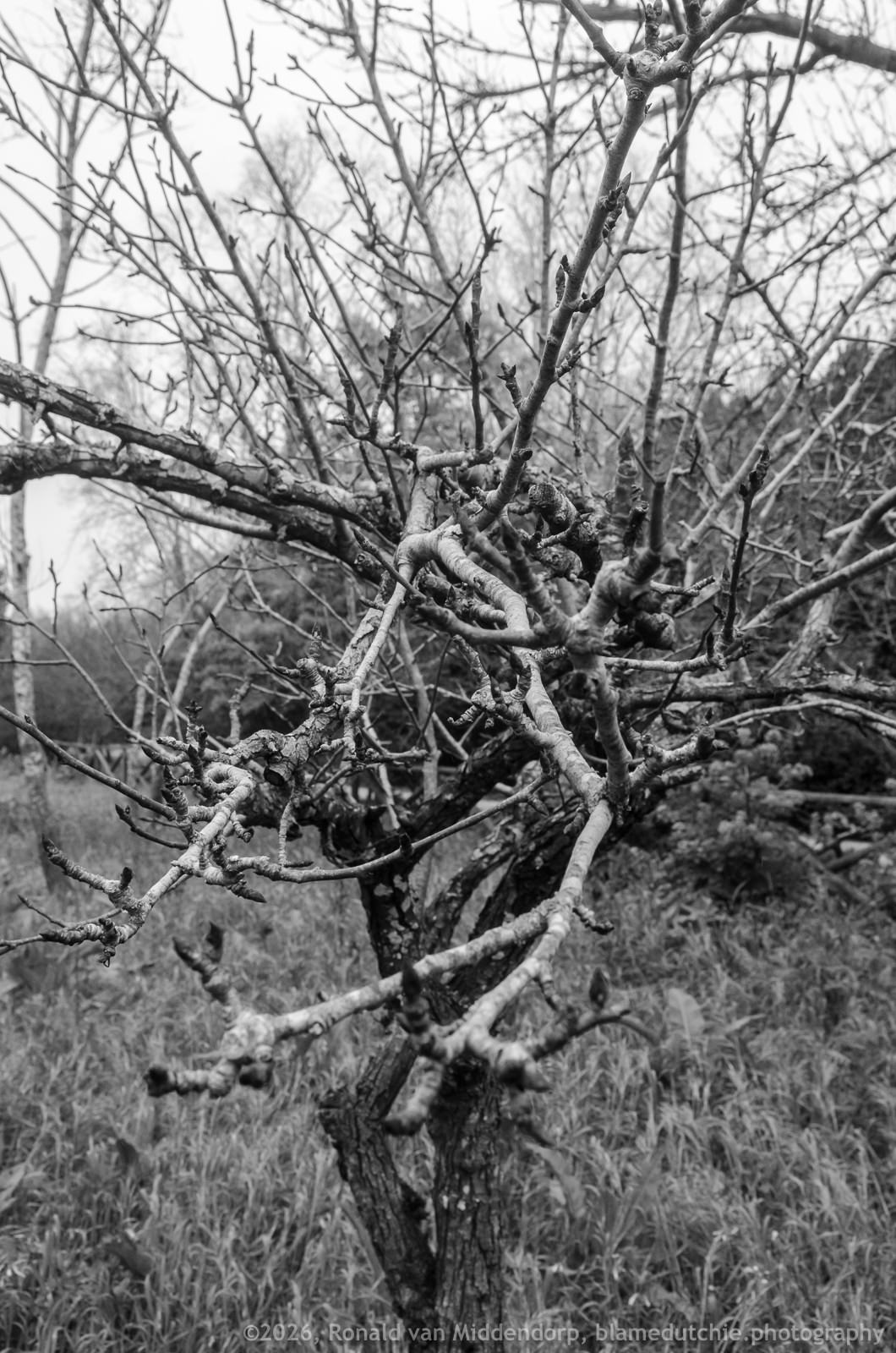
Don’t these look gnarly?
My feet start to tell me that comfortable waterproof shoes are a luxury that you will not find in the price range of my easy-fit boots with memory foam, so I climb over a low wood fence to get back on the path for a while.
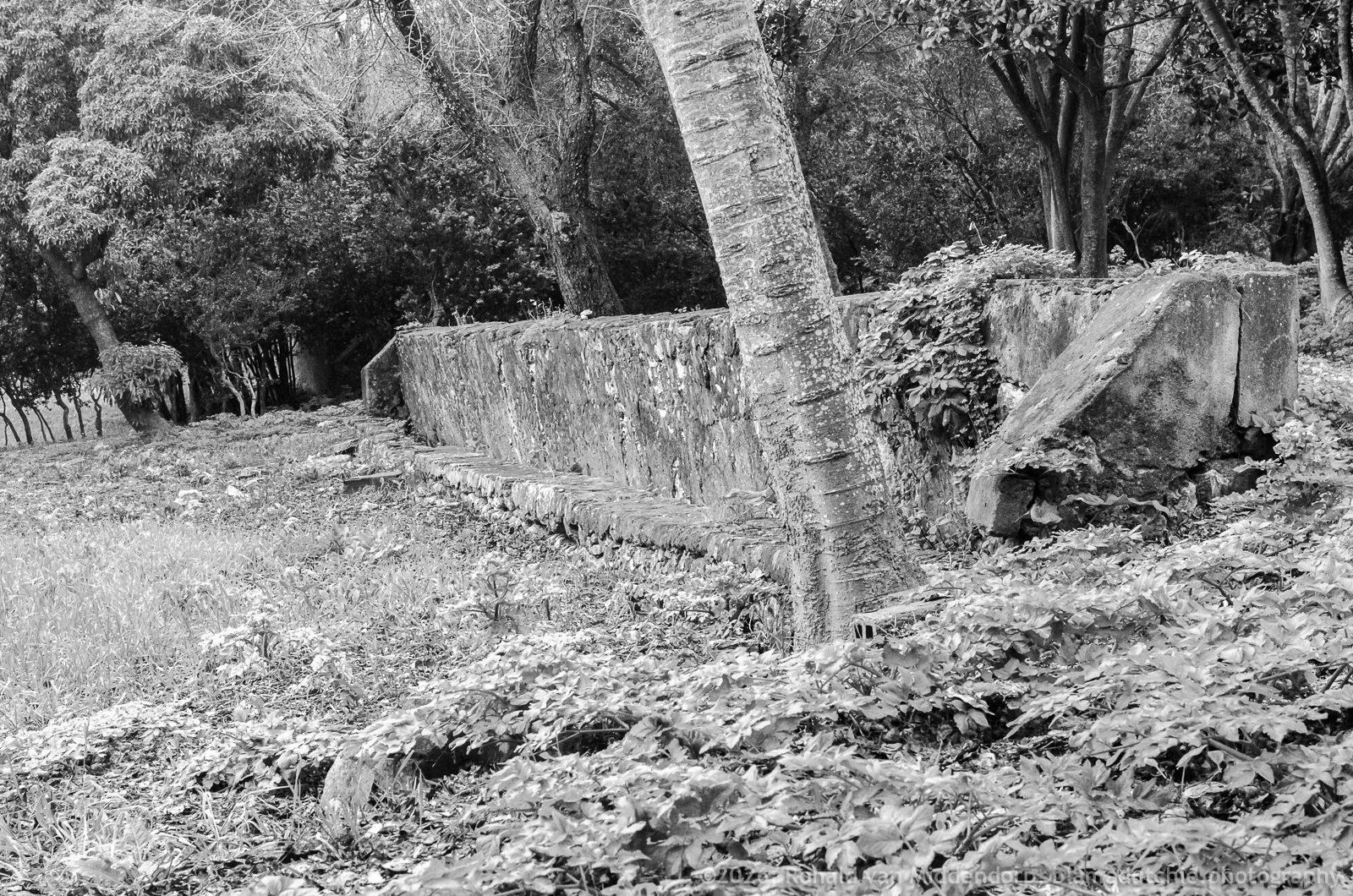
Don’t you wonder what this wall was for?
An unexpected encounter
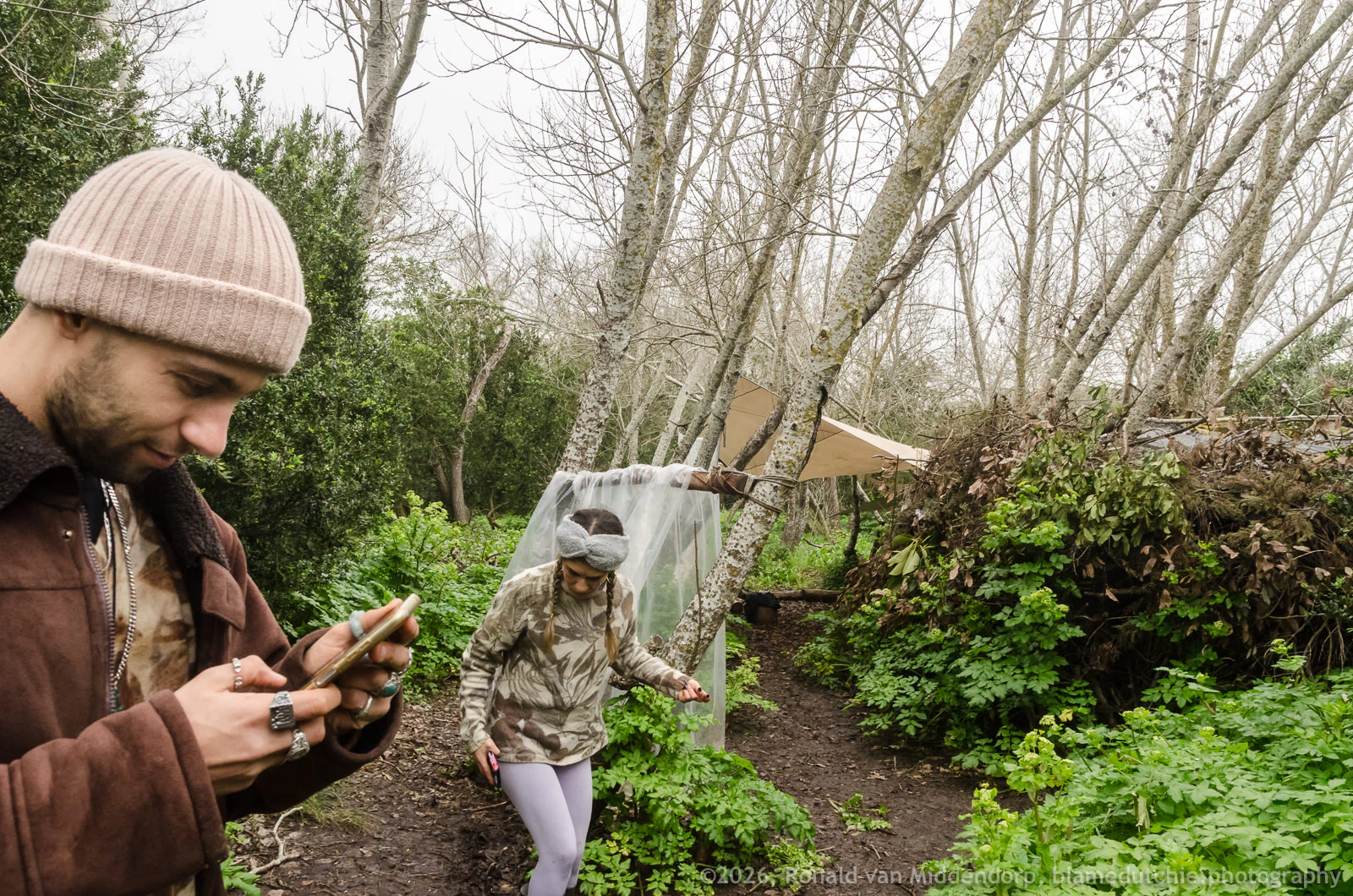
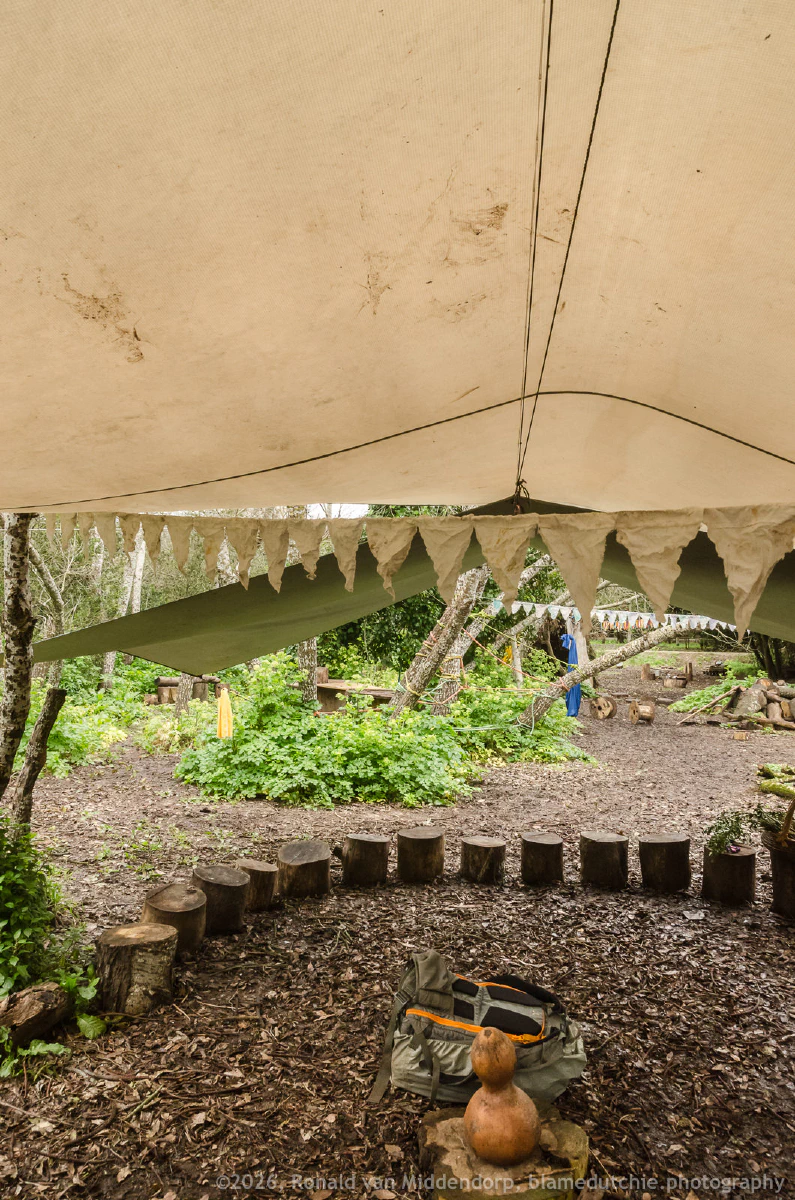
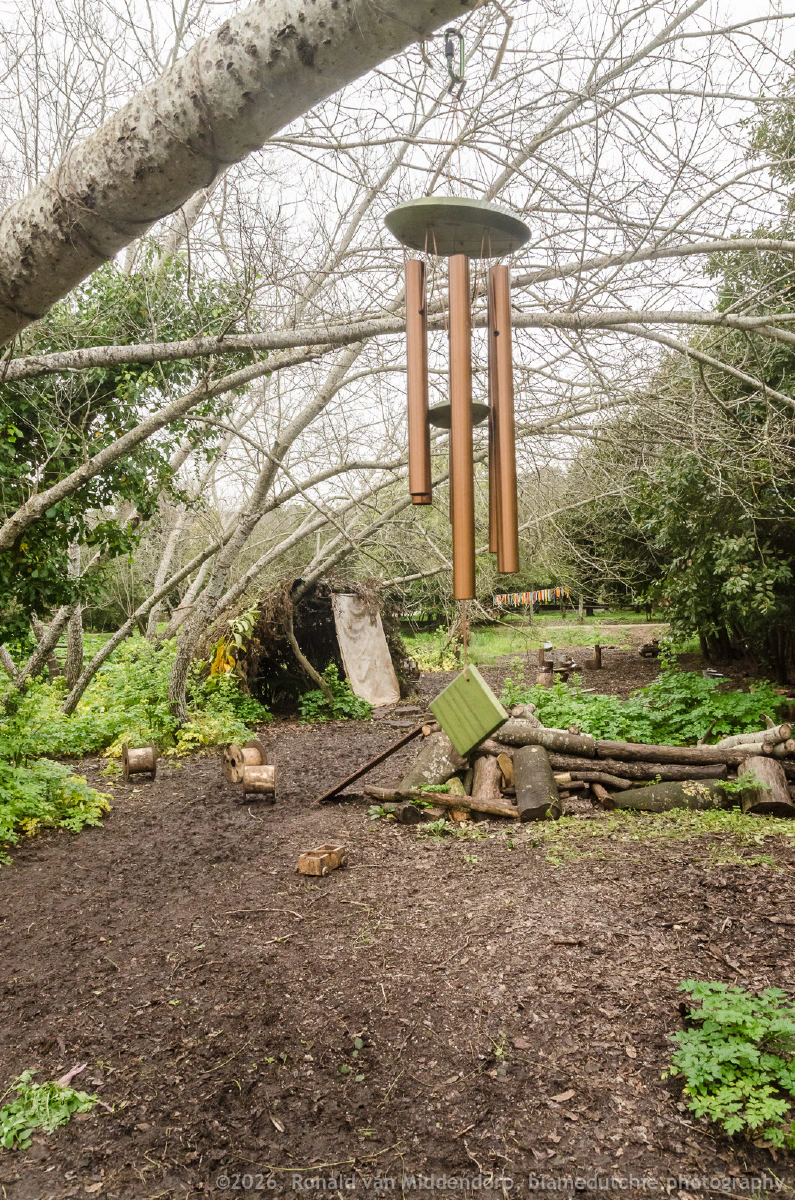
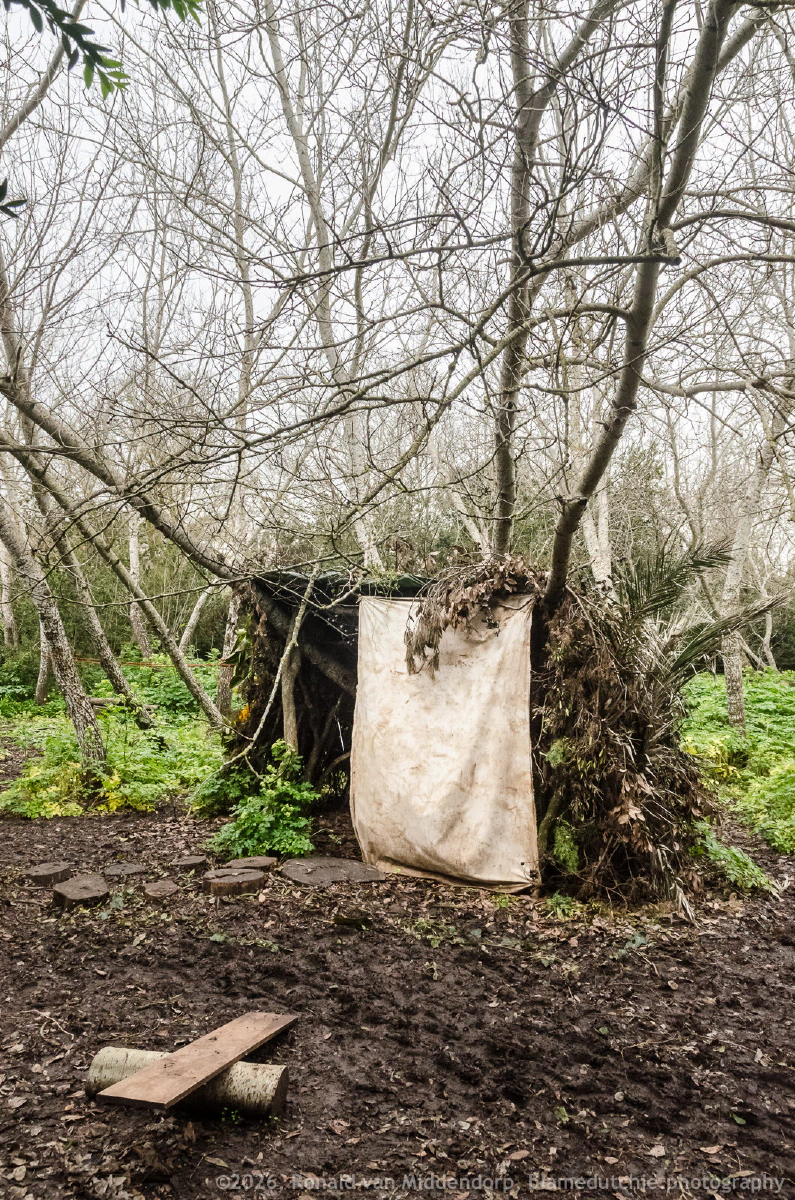
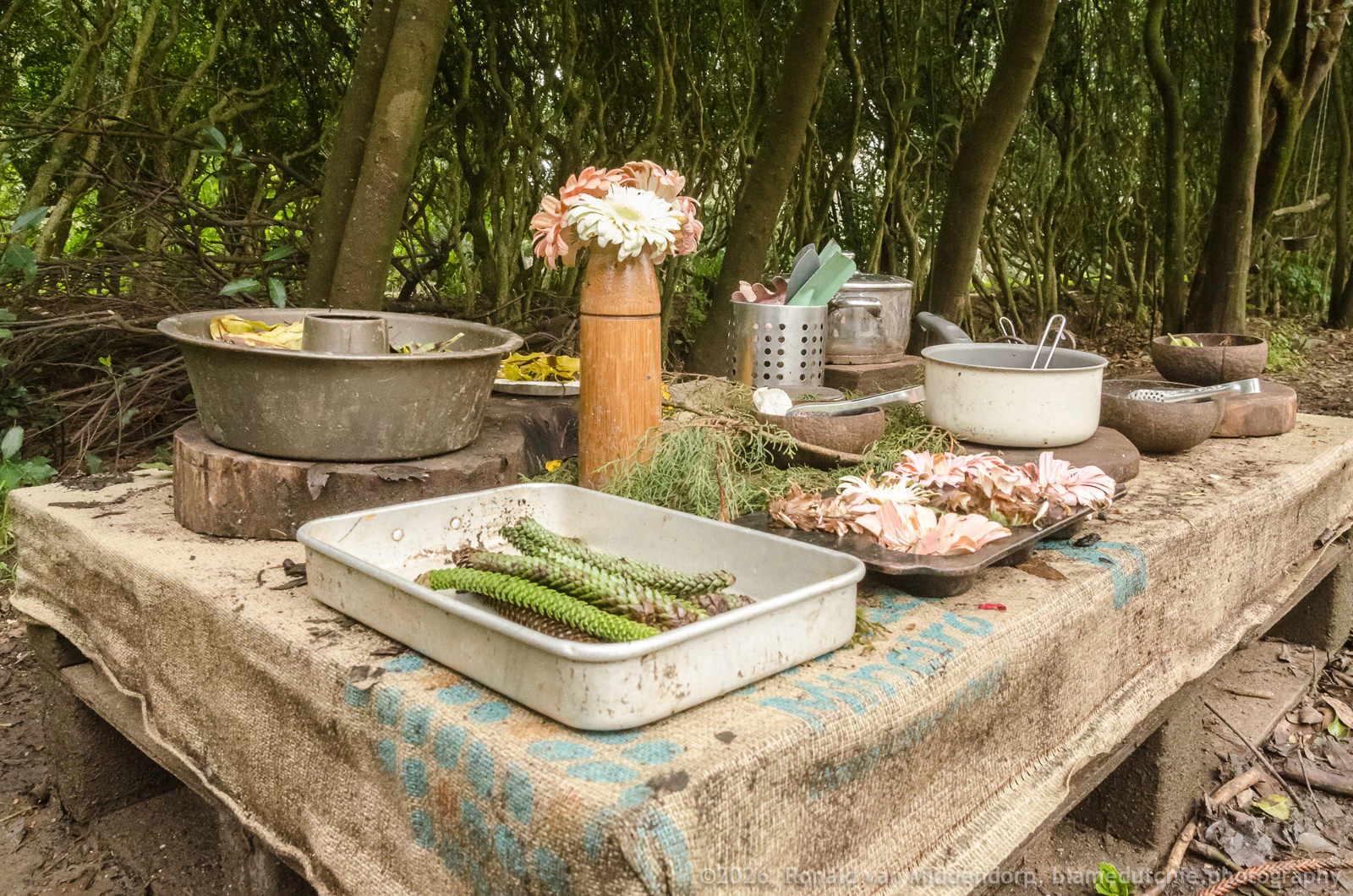
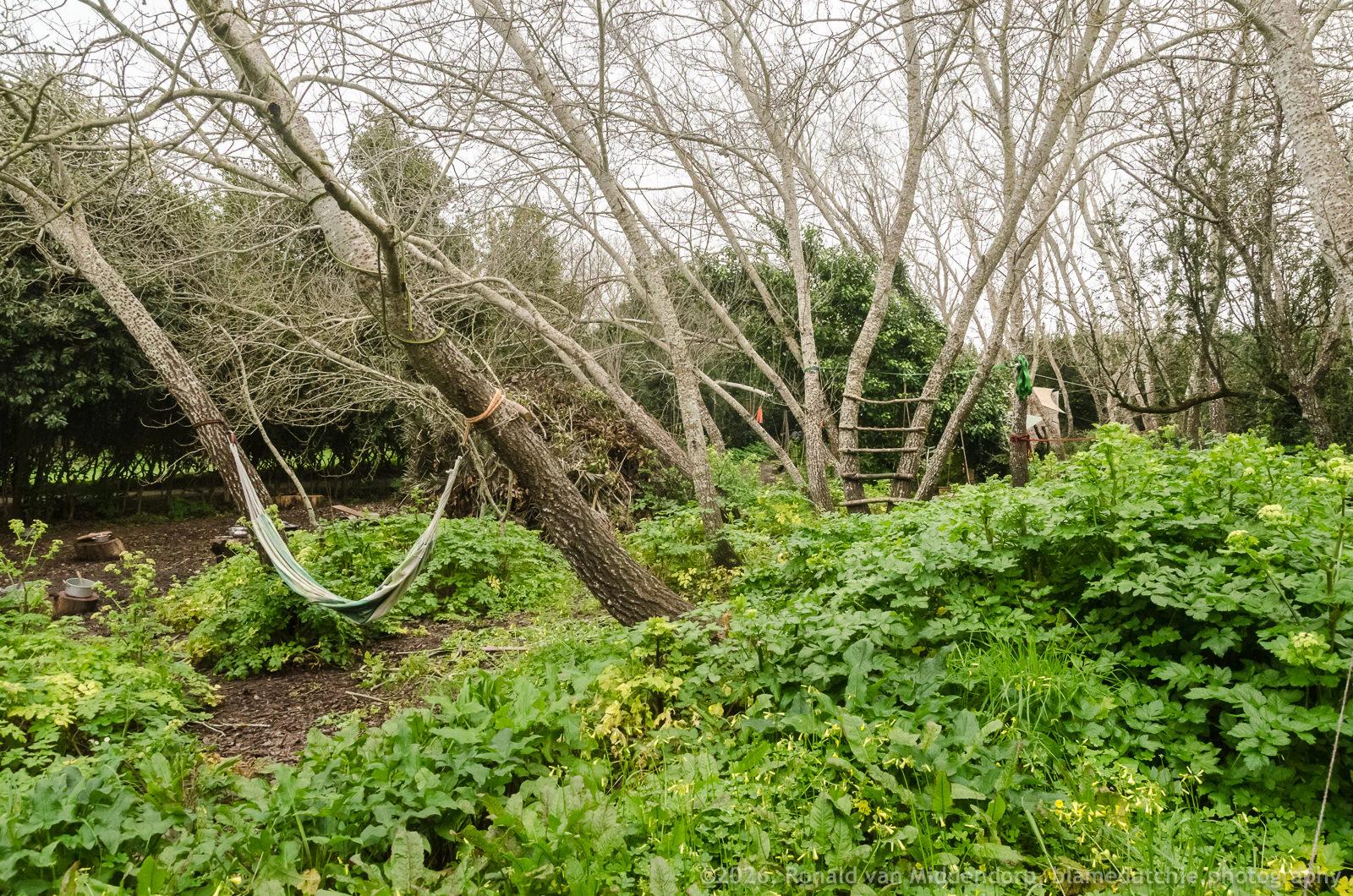
Shortly thereafter, I notice tarps hanging between the trees. Wondering if this is yet another place where homeless (migrant) workers have set up camp, I slowly approach. Not everybody is pleased with men carrying cameras, and over the years I’ve learned to be cautious. I am not getting younger, you know.
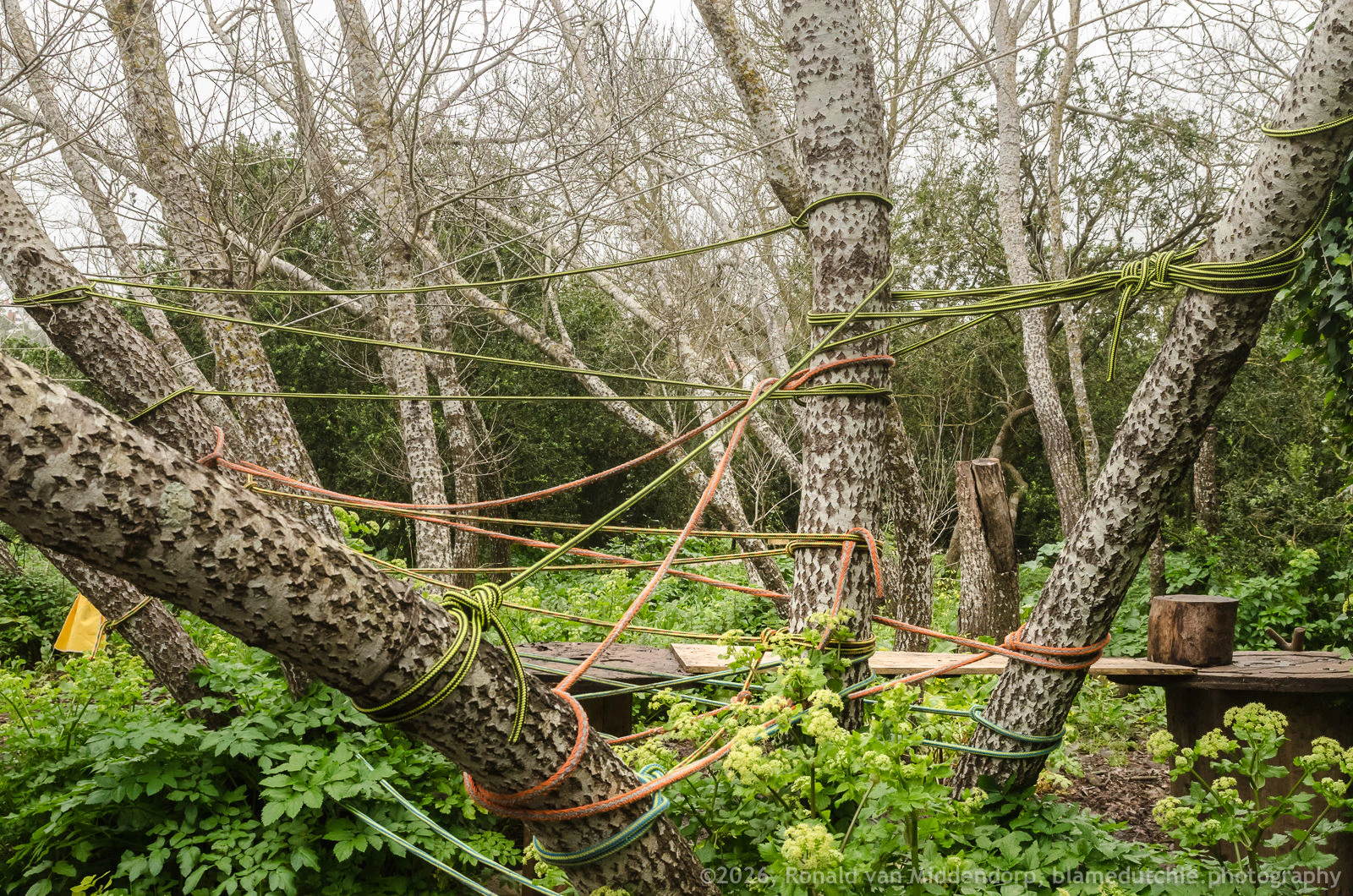
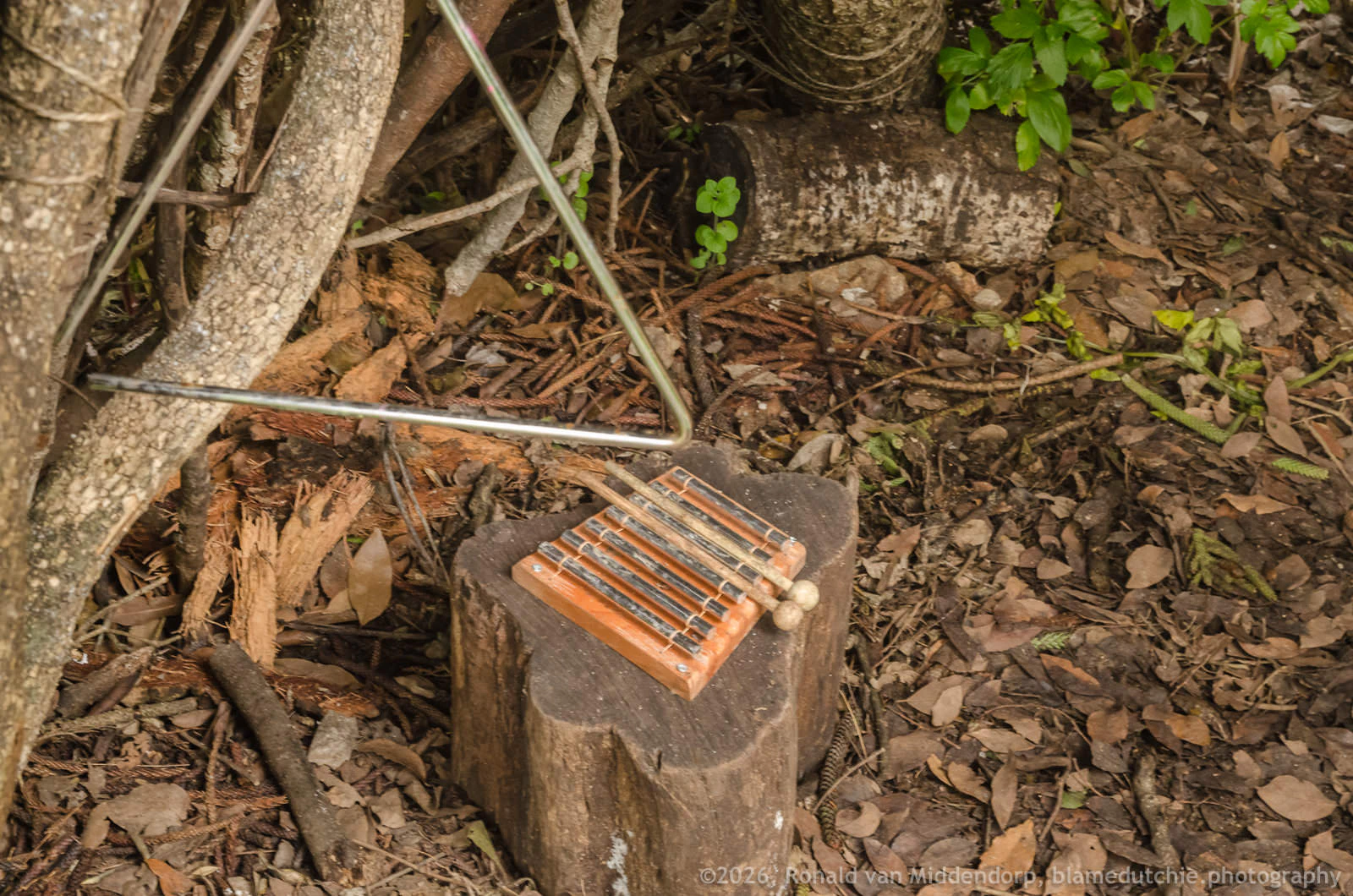
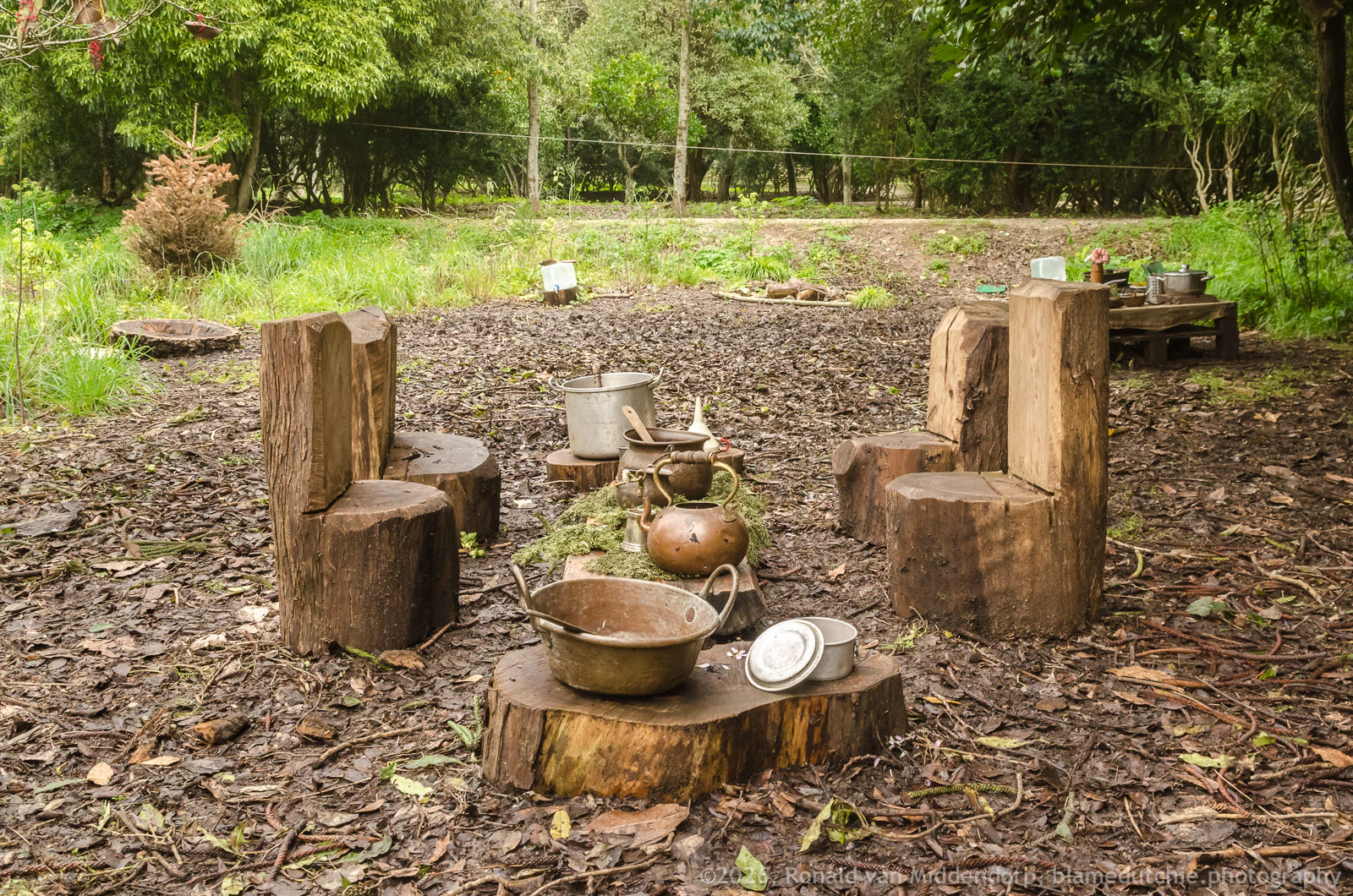
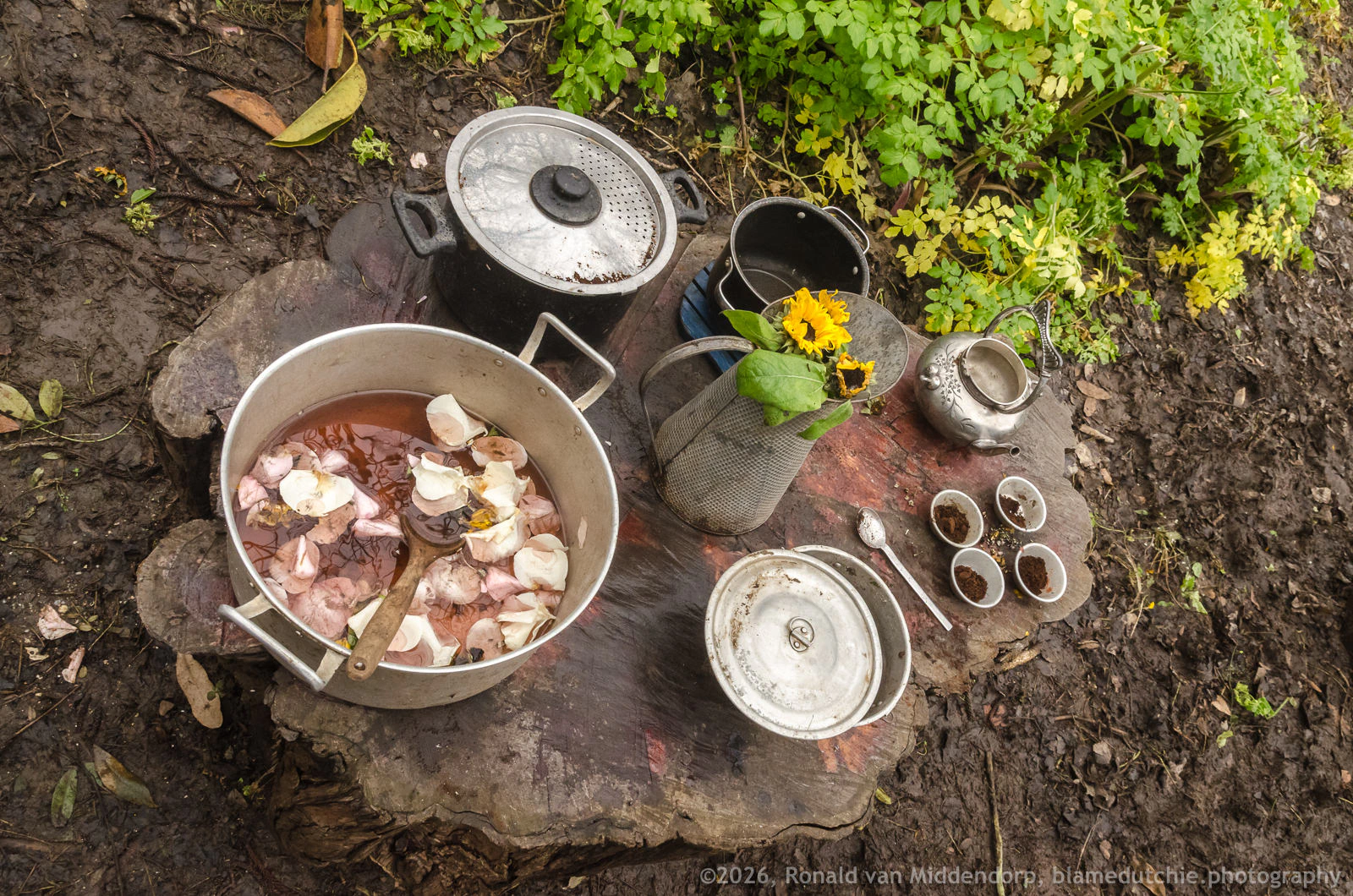
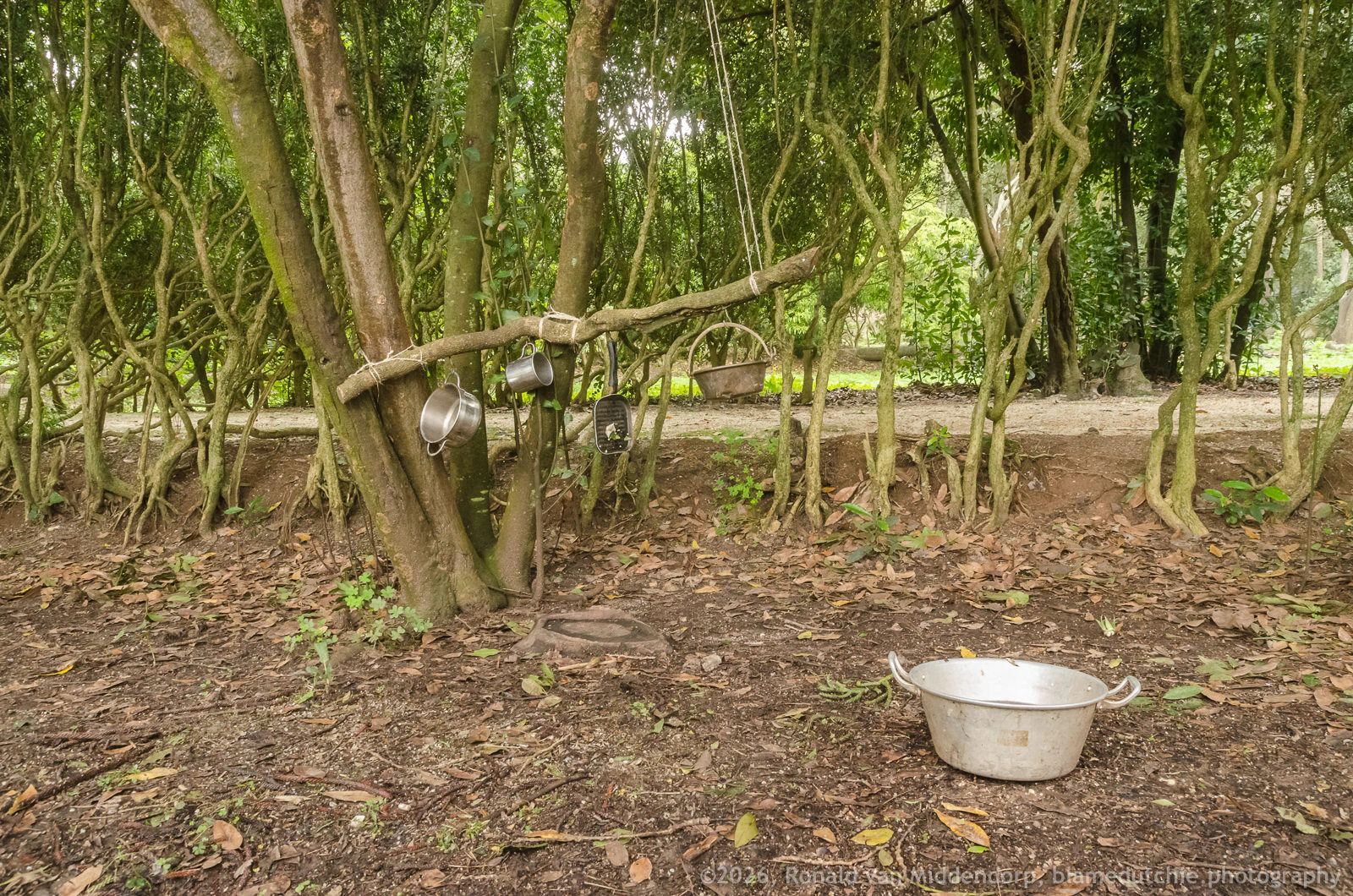
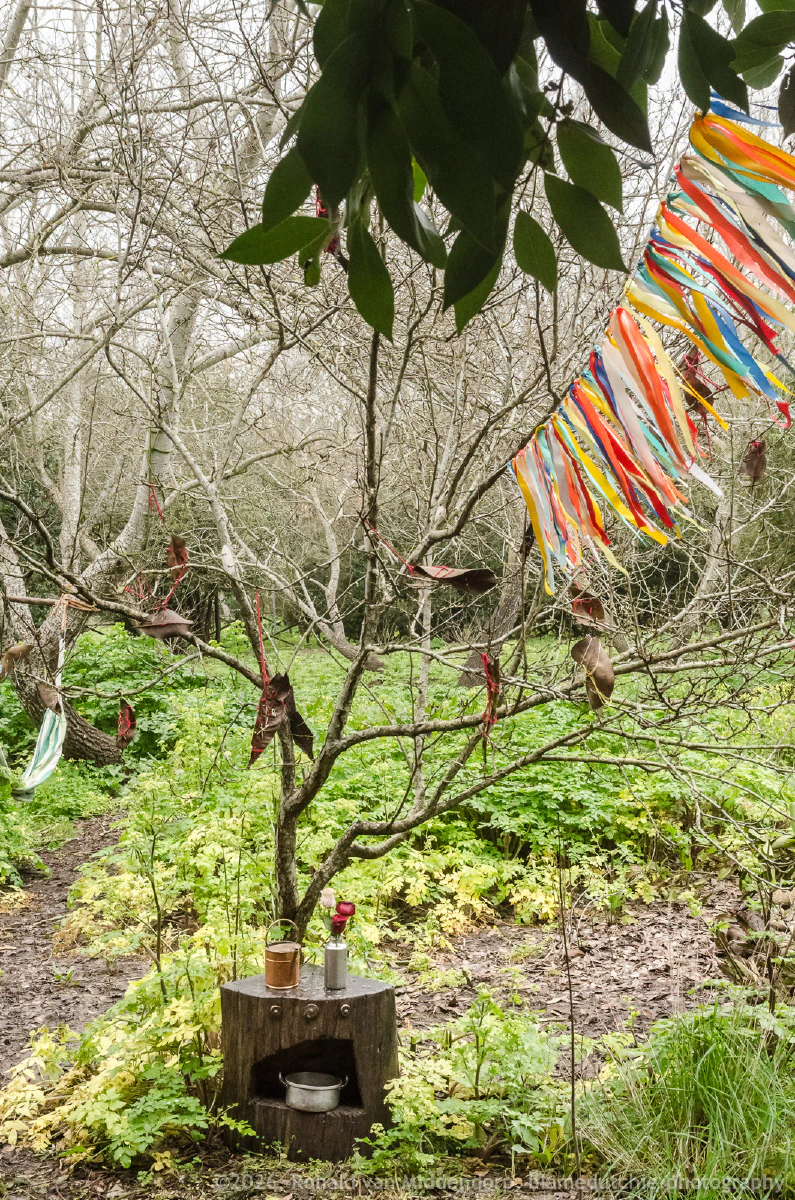
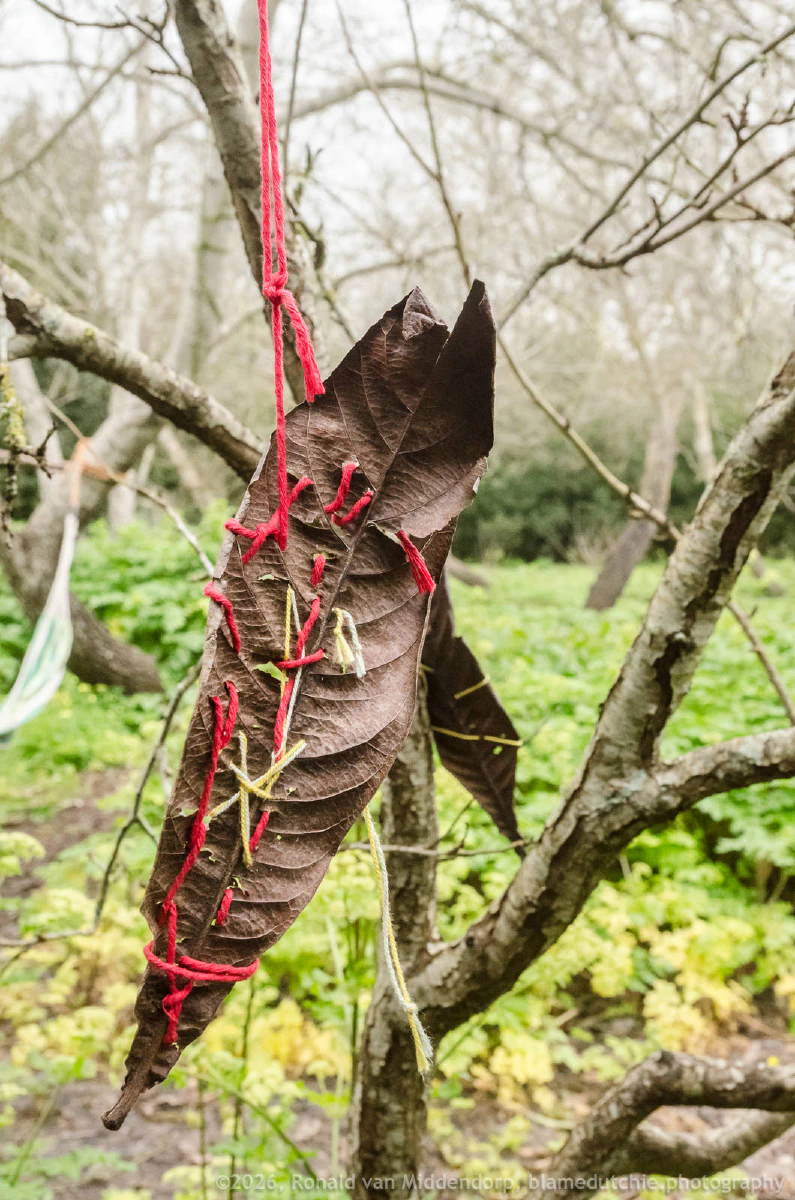
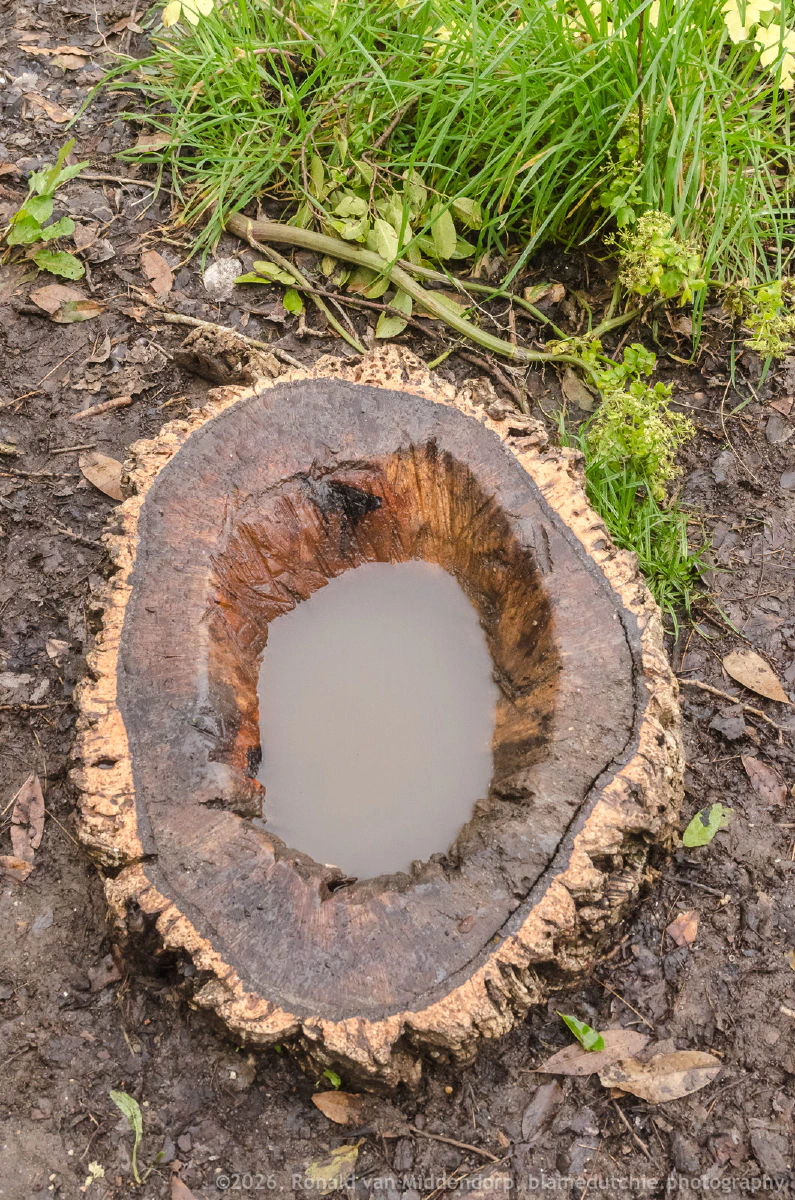
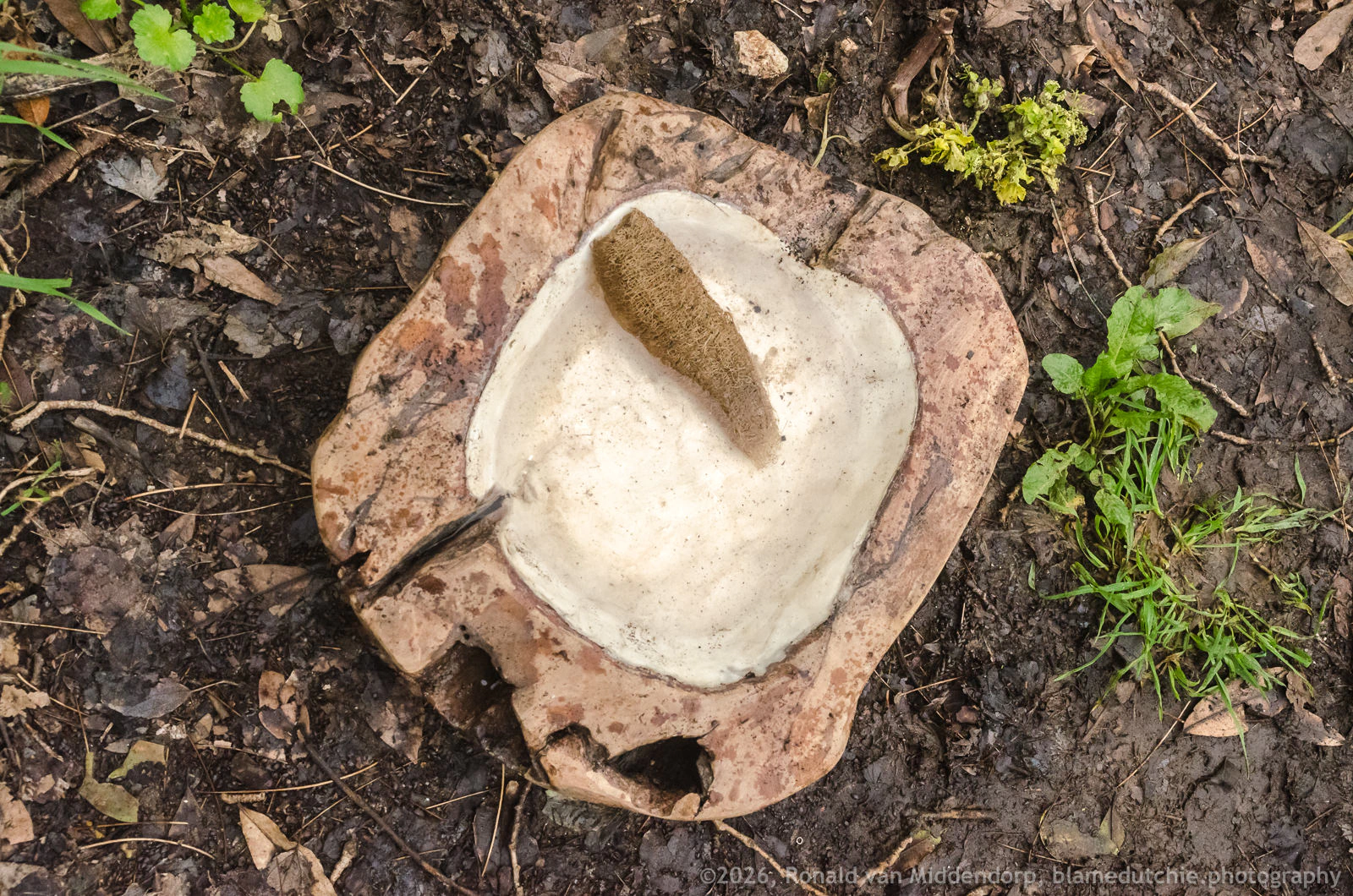
A young man approaches, I switch my earbuds off and within minutes I am enjoying a conversation about Crias na Floresta and this outdoor school’s aims and features.
Pedro Pita explains that they believe that children - people in general, really - are living too much detached from nature. As if humans are not part of it. This separation is extremely harmful. It creates unbalanced adults with unhealthy ideas about their place in the world. I agree with him; already in 1997 or there about I met children living in inner cities who had absolutely no idea that milk is something that cows produce. When asked where they thought it comes from, they said it must be some powder that in a factory gets mixed in water and put in cartons we buy in the supermarket. I kid you not!
For many children, the landscape seen through the car window or on screens has become their closest contact with the natural world. Of course, this is no contact at all.
Together with Marta Oliveira, he inspires children and families to reconnect with the rhythm of nature, because true value can be found in curiosity, and wonder for everything that lives around us. The forest invites us to align our energy with the Earth’s frequency. It is in this alignment that true connection is born and the will to care for becomes an almost automatic response. They are not the first to think that the best way we learn, is by playing. Often, no words are needed, as long as we are fully immerged in the experience of whatever it is we are doing. Only by touching, smelling and tasting the world we are a part of, we can truly learn.
On their website, Pedro and Marta explain that adults who are role models, walk alongside the children, with their feet on the ground, their hearts open, and their eyes attentive. They believe in the power of a lived and shared example. It is about building a bridge to a deep and lasting relationship with the natural world. Nature as home instead of a backdrop.
Early childhood is the fertile ground where seeds are planted and the foundations for a harmonious life are created. This phase is extremely important, because the young brain developes reapidly and in a way that can not be repeated. Create the right opportunities at the right times for each child is key. And, because young parents also have a lot to learn - about their child as well as themselves - they have to be active elements during the forest sessions. To be present, attentive, and available.
Who would want to disagree with that?
Together we can?
Seriously, initiatives like these give me hope. Hope that not everything and everone is going to hell in a handbasket. The fact that there are young people who still feel inspired to take up the challenge to be a positive force in this crazy, sometimes frightening, world.
Changing the world is madness, trying it only causes harm. We can, however, change the way we interact with and live in it.
Links
Crias na Floresta Facebook Instagram Outras Histórias - RTP Play Associação Escola da Floresta
What are your thoughts on this post?
If you liked this post, feel free to use one of the sharing options below. It always makes me smile when I see someone enjoyed it.